Sustainable Aviation
Aviation History
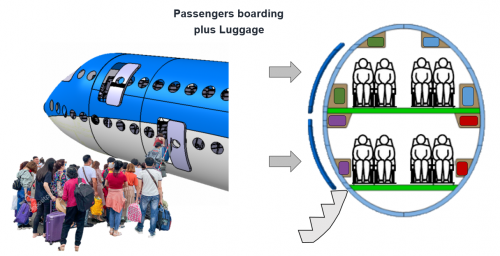
Hybrid aircraft were chosen long ago: passengers on deck and cargo and baggage below deck in the hold. This decision by the designers has resulted in the air transport system for passengers becoming unnecessarily complicated. Two (2) hours before boarding, passengers check in their checked baggage at the airport. Then, a long wait before boarding. Meanwhile, the suitcases and cargo containers must be stowed in the aircraft hold by loaders under favorable working conditions. Then, the aircraft can take off and fly to its destination. After landing, the suitcases must be returned before the journey to its final destination can continue.
Since the dawn of aviation a hundred years ago, flying has developed to a very high standard. It is fast, inexpensive, and very safe. Flying has become indispensable. It fulfills humanity's need to connect and explore the world.
Flying is for people
We should limit air freight to medicines, urgent shipments, and low weight cargo. Cargo flights can be made more sustainable with the ‘Blended-wing Aircraft configuration. One pilot on board and one remotely on the ground. We can make aviation more sustainable by revising the long-standing hybrid design choices. The primary function of aviation is to connect people globally. Family visits, conferences, honeymoons, or diplomatic meetings.
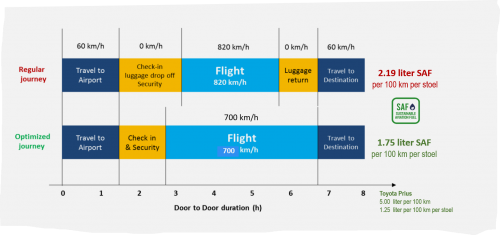
By no longer separating people and their luggage, and by flying less (unnecessary) cargo, we can make aviation approximately 30% more sustainable.
The Ecoboard Aviation system innovation represents an estimated value of €500 billion for the EU. [tbd]
Note that India is currently building 80 new airports and China is adding 200 new airports to its current total of 350. Both countries have ordered thousands of new single-aisle aircraft from Airbus and Boeing. China's F.A. Comac is continuing to build its own aircraft industry.