EcoBoard is a Sustainable Aviation Foundation

Our mission is to make aviation more sustainable in order to combat climate change.

The EcoBoard Foundation operates within the framework of the Bruntland definition from 1987 and the Paris Climate Agreement of 2015.

The foundation aims to make aviation more sustainable, reduce fuel consumption per person by 30%, lower emissions of harmful greenhouse gases, reduce noise levels around airports, increase passenger comfort, and improve the economic margins of the aviation sector.

EcoBoard makes aviation more sustainable through behavioral change.

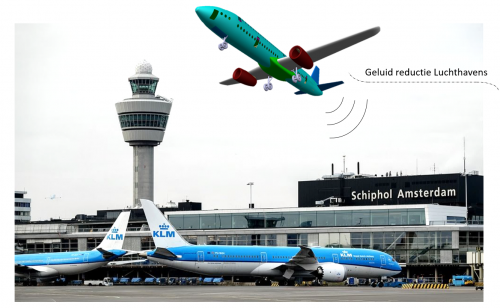
The added value of EcoBoard is that aviation can be made more sustainable, while simultaneously improving the profit margins of airlines such as KLM. Airports can handle more passengers with fewer aircraft take-offs and landings. Consequently, the total noise pollution from airports such as Schiphol decreases.

Ref Albert Plasman:  ‘The air ocean connects all people’

KLM founder Albert Plesman made this a famous statement in 1919 during the First AirTraffic Exhibition Amsterdam (ELTA). The event that directly led to the founding of KLM.

The historic vision of KLM founder Albert Plesman remains relevant today for assessing the public function of aviation.  His statement  ‘The air ocean connects all peoples’  emphasized that aviation is essentially a means of promoting Peace, Connection, and Mutual understanding. This vision also formed the basis for the international aviation treaties after World War II, which prioritize the Public value of connection.

Since the dawn of aviation, more than 100 years ago, flying has developed to a very high standard. It is fast, inexpensive, and very safe. Flying has become indispensable. It fulfills humanity's need to connect and explore the world.

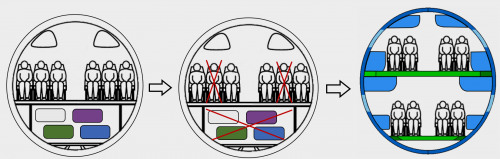
We make aviation more sustainable. Travelers board and disembark more efficiently. Hand luggage instead of checked-in baggage. We refer to this as door-to-door ‘system optimization’. The rationale behind this approach is that 'keeping travelers connected' to their luggage yields much greater sustainability than technical aircraft improvements. Only a relatively small adjustment to the cabin layout is required to make aviation more sustainable by approximately 30%.

A major step towards zero-emission aviation.


About Us »
Agenda

9 october 2025
Luchtvaart in Transitie Aero Conferentie
20-24 july 2026
Farnborough International Airshow
Q1-Q2 2026
Clean Aviation EU Call for Proposals
Q3-Q4 2026
Apply for the ANBI status EcoBoard Aviation

Sustainable Aviation

Aviation History

Hybrid aircraft were chosen long ago:  passengers on deck and cargo and baggage below deck in the hold. This decision by the designers has resulted in the air transport system for passengers becoming unnecessarily complicated. Two (2) hours before boarding, passengers check in their checked baggage at the airport. Then, a long wait before boarding. Meanwhile, the suitcases and cargo containers must be stowed in the aircraft hold by loaders under favorable working conditions. Then, the aircraft can take off and fly to its destination. After landing, the suitcases must be returned before the journey to its final destination can continue.

Since the dawn of aviation a hundred years ago, flying has developed to a very high standard. It is fast, inexpensive, and very safe. Flying has become indispensable. It fulfills humanity's need to connect and explore the world.

Flying is for people

We should limit air freight to medicines, urgent shipments, and low weight cargo. Cargo flights can be made more sustainable with the ‘Blended-wing Aircraft configuration. One pilot on board and one remotely on the ground. We can make aviation more sustainable by revising the long-standing hybrid design choices. The primary function of aviation is to connect people globally.  Family visits, conferences, honeymoons, or diplomatic meetings.

By no longer separating people and their luggage, and by flying less (unnecessary) cargo, we can make aviation approximately 30% more sustainable.

The Ecoboard Aviation system innovation represents an estimated value of €500 billion for the EU. [tbd]

Note that India is currently building 80 new airports and China is adding 200 new airports to its current total of 350. Both countries have ordered thousands of new single-aisle aircraft from Airbus and Boeing. China's F.A. Comac is continuing to build its own aircraft industry.


Read More »

R&D Lab

Solutions are designed and tested within the EcoBoard R&D laboratory. The R&D lab actively positions itself within the European aviation network.


Hand Luggage Only

More and more people want to travel with only hand luggage. This saves time at departure and arrival. During a cabin performance review, it also became apparent that the middle seat offers less comfort and is therefore less desirable.

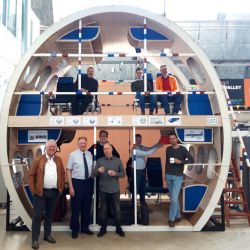
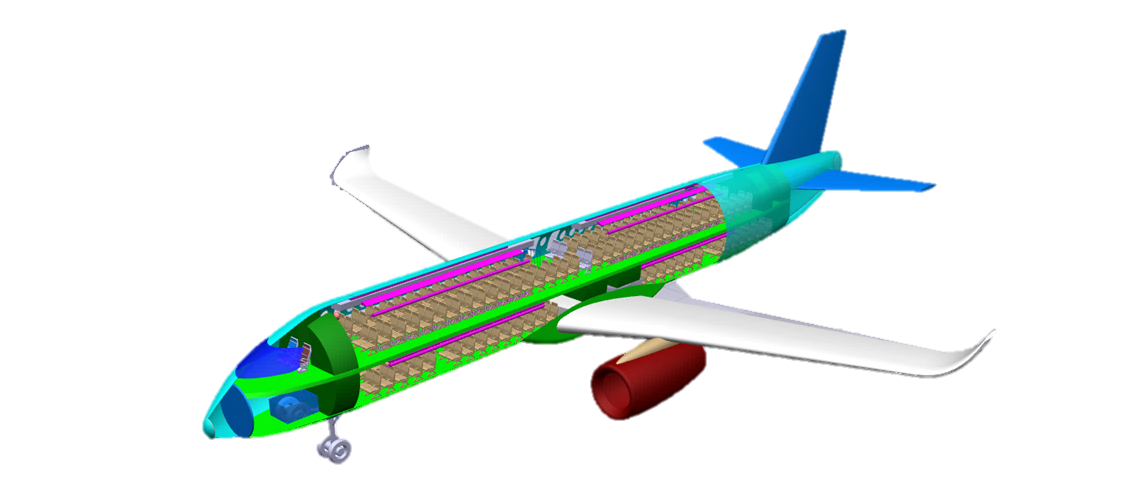
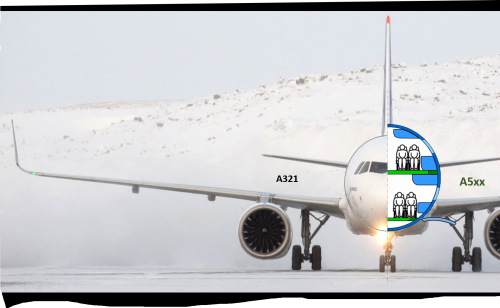
The new layout features two passenger compartments, one below and one above. Each passenger compartment has two seats on both sides, and there is sufficient space for hand luggage storage.

Thanks to this cabin layout, the boarding process will proceed faster. After all, there are more access doors and therefore fewer bottlenecks.


Read More »

Participate!

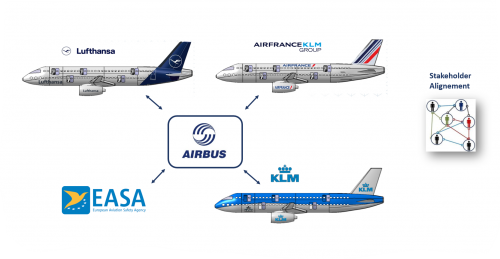
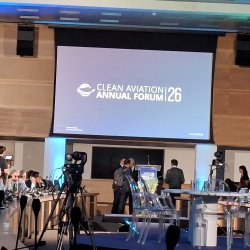
Collaboration forms the basis of sustainable aviation. Partners already participating include InHolland University of Applied Sciences, Avans University of Applied Sciences Breda, Schiphol Airport, and the DACE Foundation. Welcome partners include: Lufthansa, AirfranceKLM, Airbus, EASA, and LiT. The ambition is to establish additional collaboration with low-cost airlines such as IndiGo, EasyJet, and Ryanair. We are aligning with the EU CLEAN AVIATION program.

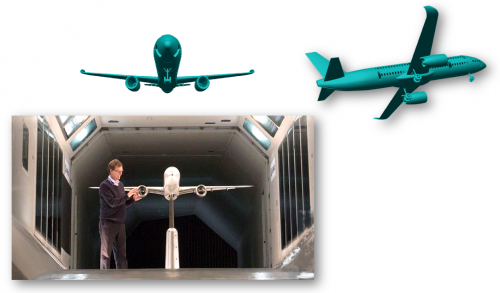
We intend to conduct wind tunnel tests and accurate calculations of fuel reduction in collaboration with the NLR. We are considering asking TNO to prepare an Environmental Impact Assessment (EIA).


A noise reduction calculation can be carried out by Schiphol Airport together with environmental experts from, for example, the Municipality of Hoofddorp.


Want to become a sponsor?


Donate Now »
Top