Solutions are designed and tested within the EcoBoard R&D laboratory. The R&D lab actively positions itself within the European aviation network.
Hand Luggage Only
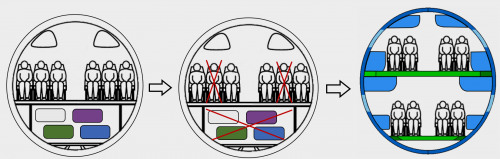
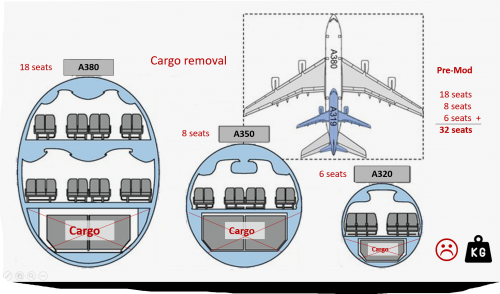
More and more people want to travel with only hand luggage. This saves time at departure and arrival. During a cabin performance review, it also became apparent that the middle seat offers less comfort and is therefore less desirable.
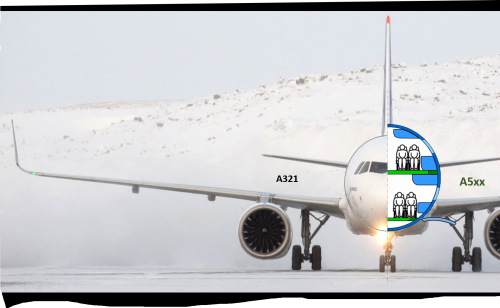
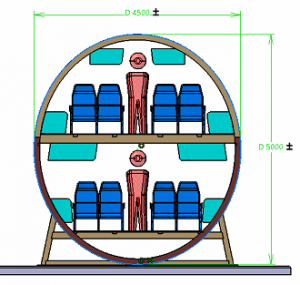
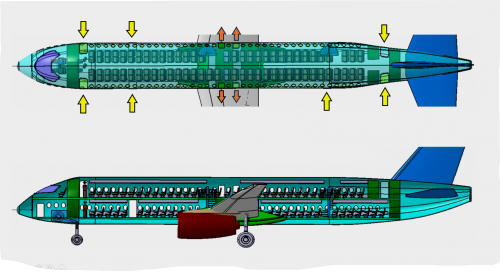
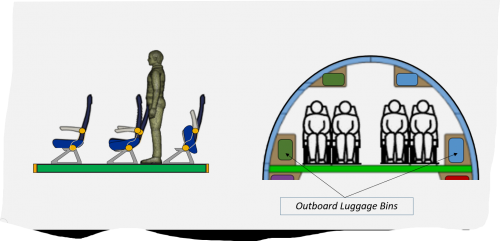
The new layout features two passenger compartments, one below and one above. Each passenger compartment has two seats on both sides, and there is sufficient space for hand luggage storage.
Thanks to this cabin layout, the boarding process will proceed faster. After all, there are more access doors and therefore fewer bottlenecks.
R&D Laboratory
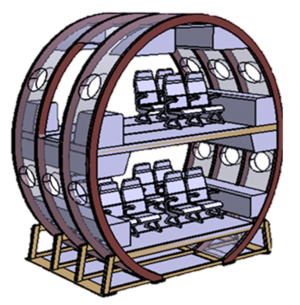
To visualize boarding with hand luggage only, 3D computer models and scale models are under development.
In collaboration with various partners, we are designing and building a full-scale cabin model. This allows us to visualize the design and analyze it for sustainability, comfort, and dimensions.
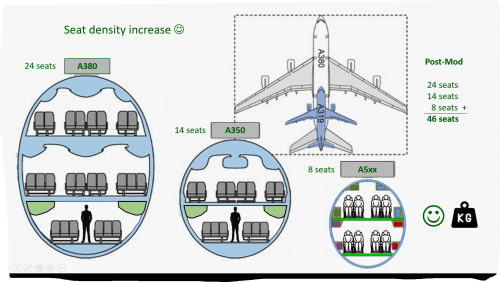
One of the key challenges is creating an optimal cabin design and striking a balance between sustainability, passenger comfort, and functionality. We are developing a 2+2 seat configuration on both decks, allowing more than 245 passengers to travel comfortably. Luggage bins are designed to accommodate two carry-on suitcases per passenger and are positioned to provide sufficient space for all personal luggage.
Stairs connect both passenger decks. Seven access doors are strategically placed for rapid entry and safe evacuation. Kitchenettes and restrooms are located at the front and rear. The mock-up of the proposed cabin configuration offers insight into the full-scale passenger experience. It demonstrates that the 2x2 seat arrangement is much more comfortable than the current 3+3 seat configuration.
Research into foldabla seat cushions
Research into foldable seat cushions The goal is to facilitate the boarding process. Accessibility to the outboard luggage bins will improve if the seats are foldable.
Hydrogen Fuel Aircraft configuration
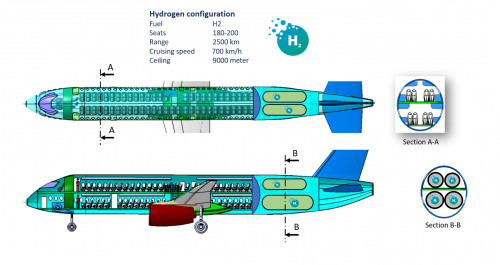
The R&D lab is also developing a cabin layout that allows for the positioning of hydrogen tanks. We are designing an aircraft configuration in which the relatively large hydrogen tanks have a minimal impact on the number of seats.
The energy density of hydrogen is much lower than that of kerosene. Space has been cleared at the rear of the fuselage for the large fuel tanks. The aircraft's flight range is limited to 2,500 km to prevent too many seats from having to be sacrificed for the hydrogen tanks.